From order to invoiceHow the retyping gets cut out.
One order, one invoice
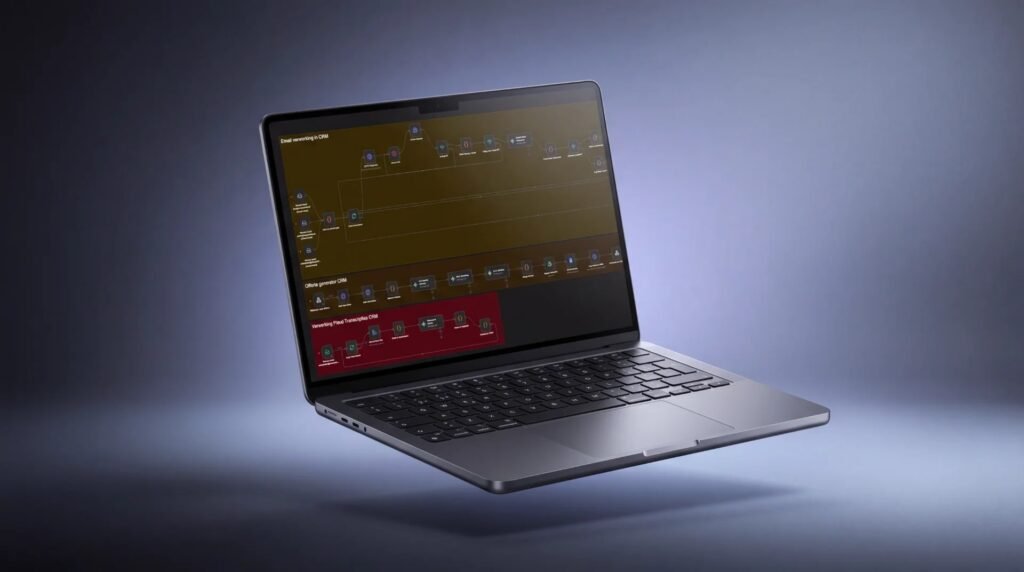
An online store retyped every order into its accounting by hand. We worked out how that can happen on its own: a sales invoice for every order. Below, you'll see step by step how that works.
- Client
- An online store
- The question
- Orders into the books automatically
- Our work
- The solution, worked out step by step
- When
- Spring 2026
- Our service
- AI automation
How it was
There was no ready-made connection between the online store and the accounting software. All the store could provide was a file of orders.
How it works
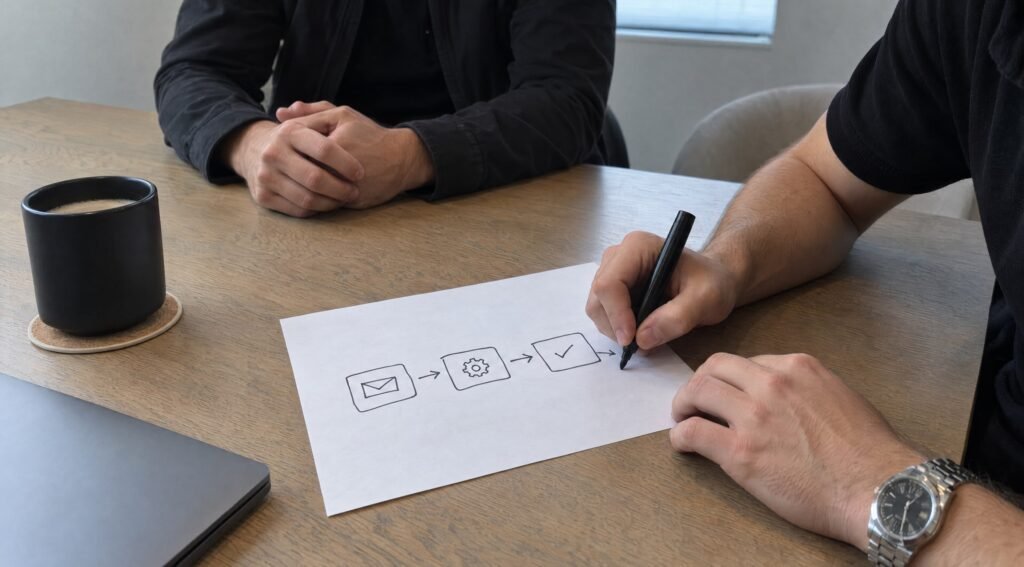
Five steps. One of them stays manual, and we're upfront about it.
The file from the online store
The orders come out of the online store as a file. Someone exports that file and puts it in a folder.
Grouping the rows
In the file, one order takes up several rows. The system reads the file and groups the rows by order.
Finding the customer
It looks up the customer in the accounting software, by email address or by name and postal code. Even when it's spelled slightly differently. If the customer doesn't exist yet, it creates them.
The invoice
It creates the sales invoice, with the VAT, shipping costs and discount as they appear in the file.
Two checks
Is anything missing? And has this order been processed before? An order must never become an invoice twice.

Jesse worked it out
Jesse Scherpen worked out the solution. Do you also have two systems that don't talk to each other? This is where it starts.