Becoming a prompt engineer: 6 steps for business owners who want to work smarter with AI
 Jesse ScherpenAugust 8, 20257-minute read

Over the past two years, every small and mid-sized business has done something with AI. Tried ChatGPT, had it write an email, had it rewrite the text of a quote. Some were blown away, others disappointed. When you ask around, the disappointment often follows the same pattern: the prompts were too short, too vague or too one-sided. AI wasn't the problem. The instruction was.
At SharpClicks, we build AI workflows for clients every week in our AI automation projects. On top of that, we use AI every day ourselves: for strategy, for the text of our quotes, for blog research. The difference between a useless answer and a brilliant one almost always lies in the prompt. Writing good prompts is a skill, and you can learn it in six steps. No abstract framework, just concrete exercises.
Why prompt engineering isn't just a buzzword
"Prompt engineer" sounds like a hipster job title. In practice, it simply means someone who knows exactly how to steer AI tools. A doctor writes better prescriptions when they know which medicine works for which symptom. A business owner gets better AI output when they know which kind of prompt works for which kind of task. It's a skill, not a title.
The gain is concrete: a well-prompted AI assistant can take hours of manual work a week off a small business's hands. Writing emails, editing quote texts, setting up blog posts, analyzing customers. Bad prompting gets you mediocre output that you end up rewriting yourself anyway. Good prompting gets you output you can actually use.
How AI actually works under the hood
A short technical explanation, because it helps you prompt better. AI models predict the next word based on probability. They don't "think". They predict. A prompt is a strong hint: the more specific it is, the more closely the prediction sticks to what you mean.
What this means in practice:
- Vague prompts get vague answers, because the model guesses based on generic expectations.
- Specific context (role, audience, format, length, style) makes the model more accurate.
- Examples help more than instructions, because the model recognizes the pattern.
- Thinking step by step is a trick that improves the reasoning.
Step 1: tell the model who it is
Start every prompt with a role. "You're an experienced copywriter for B2B software." Or: "You're an SEO expert who works for small business clients in Drenthe, the Netherlands." Or: "You're an experienced financial advisor who explains things to business owners without a financial background."
Why does this work? The model uses the role as an anchor. A copywriter and a journalist both write text, but in a completely different tone. By setting the role up front, you rule out a lot of wrong assumptions.
Step 2: give context
The biggest mistake beginners make: giving too little context. An AI model has no idea about your business, customers or industry unless you tell it. So stop writing:
Write an email to my customer about the delivery.
And start writing:
Write an email to a small business customer in the construction industry. They placed an order for building materials worth €4,500. The delivery is two days late because of a problem at a supplier. Keep the tone down to earth, offer a small compensation (10 percent off their next order), and ask whether they'd like to talk through alternative materials for the coming week.
Three times the input, an answer five times as useful.
Step 3: define the output format
Ask specifically for the kind of answer you want:
- Length: "in 150 words at most", "in 3 paragraphs", "in a list of 5 bullet points".
- Structure: "start with the main message, then 3 supporting arguments", "as an email with a subject line, an opening line, three paragraphs and a closing".
- Tone: "down to earth and direct, no jargon", "friendly but businesslike", "humorous with an undertone of expertise".
An AI that knows what the format should be gives a far more useful answer than an AI that has to guess.
The good prompts I write don't look like quick notes. They look like instructions for a new employee. I explain the role, I explain the context, I explain what a good end result would be, and only then do I ask the question. That's not wasted time. It's the time I would otherwise spend rewriting.
Jesse Scherpen, owner of SharpClicks
Step 4: use examples
One good example is worth its weight in gold. If you ask AI to write something in your style, paste one or two examples of earlier pieces you wrote well into the prompt. "Here are two examples of earlier emails I wrote in my style. Now write a new one in the same tone, but about [topic X]."
This is called "few-shot prompting" and it works remarkably well. Within the prompt, the model learns what your style is and imitates it with a precision that's almost impossible to get with explicit instructions.
Step 5: ask for step-by-step thinking
For complex tasks, add "think this through step by step" or "first explain how you'll approach this before you give the answer". This is called chain-of-thought prompting. For analytical tasks (for example "what's the best pricing strategy for this offer"), it improves the outcome considerably.
Example:
I have a SaaS offering for small businesses. Three plans: Small €49, Medium €99, Large €199. Small gets 60 percent of signups, Medium 30 percent, Large 10 percent. Question: how do I change the pricing to pull more customers to Medium? Think this through step by step: first analyze why people probably choose Small, then what they need to move to Medium, then which pricing change would make that happen.
Step 6: always verify
AI models hallucinate. They make up numbers, quotes and facts that sound convincing but are factually wrong. Almost all AI output needs to be checked before you publish it or base a decision on it:
- Numbers and statistics: double-check them against primary sources (Statistics Netherlands, industry associations, annual reports).
- Quotes: if AI "quotes" someone, check whether that person ever really said it.
- Facts about your own business: AI doesn't know which products you have; it makes them up.
- Legal and financial statements: never copy them blindly, always have a specialist check them.
Four prompt patterns you can use every day
The rewrite pattern
"Here's a text. Keep the message, make it 30 percent shorter, keep the tone of voice, and replace jargon with plain language."
The analysis pattern
"Here's a document. Answer these five questions based on what's in it. For each question, give a quote from the document as evidence. If the information isn't in it, say so."
The brainstorm pattern
"Come up with 20 ideas for [goal]. Start with a broad, free brainstorm without filtering. Then pick the three strongest, and for each one explain why you chose it."
The email pattern
"Write an email to [audience] about [topic]. Goal of the email: [get them to do X]. Tone: [tone]. Length: [length]. End with [specific call to action]."
Ethical pitfalls
A few things we explicitly don't do, and you shouldn't either:
- Sharing personal data by accident. No customer data, no credit card details, no confidential contracts in public AI tools. For sensitive data, use enterprise versions with data residency and no training on your input.
- Presenting AI content as written by a human where that's ethically problematic. No automated reviews, no fake testimonials.
- Publishing without checking. Readers can smell AI output, and it damages the brand.
How do you get better at prompting?
My practical advice: pick one task that comes back every week and build your best prompt for it. For example, a weekly customer report, or the summary of incoming emails. Work on that one prompt for four weeks: refine it, test variations, see what works best. After that, you have a prompt that saves you time every week, and the skill to write good prompts for other tasks faster.
Conclusion
Good prompting isn't a technical trick. It's a skill in clear thinking. If you can put things sharply, you get sharp AI answers. If you're vague, you get vagueness back. Business owners who invest in this now will have an AI workspace within three months where hours of work a week simply disappear. The rest will keep using AI as an expensive way to produce the same mediocrity faster.
We help small and mid-sized businesses with AI implementation, prompt libraries and workflows that fit their specific processes. Want to talk it through? Book an intro call, no sales pitch.
What we can help you with
- AI automation: prompt libraries and n8n workflows that build your best prompts into your daily processes.
- Custom software: internal tools where AI features work on your exact data and context.
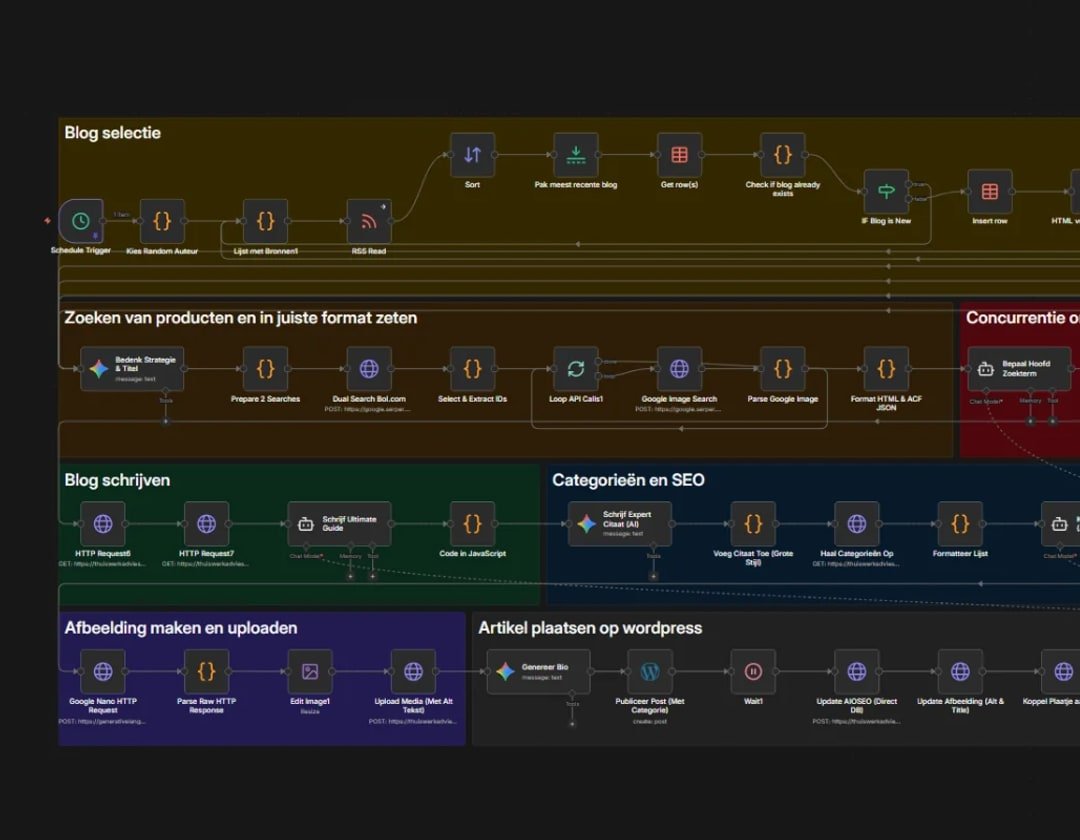
- Blog automation: an AI workflow for weekly blog content that really keeps your voice.
 More on this topic
AI automation. Work that does itself. One-time build €750 to €2,500.
See the service
Written by Jesse
Jesse Scherpen is the owner of SharpClicks. He studied e-commerce at Windesheim, wrote blogs himself and managed ads for clients, and now builds the systems that take over that work.